Recycling and Sustainability — Garden Maintenance Mottingham
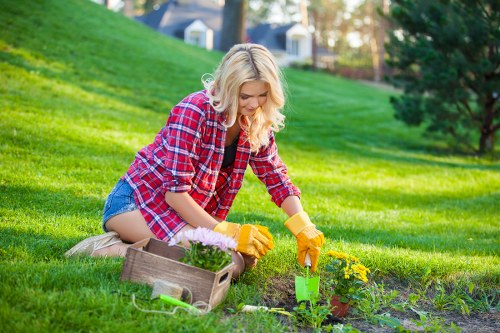 At Garden Maintenance Mottingham we take an active role in creating an eco-friendly waste disposal area and a sustainable rubbish gardening area across every job. Our approach to garden maintenance in Mottingham is built around minimising landfill, maximising reuse and ensuring that green waste, timber, soil and packaging are processed through the right local channels. We combine practical on-site separation with careful transport and community reuse partnerships.
Our core aim is simple: reduce environmental impact while delivering excellent Mottingham garden care. We follow local borough policies on waste separation — including common schemes in neighbouring boroughs that separate organics, dry recycling, plastics and bulky items — and adapt them for each property. The result is a cleaner garden and a smaller carbon footprint for every season.
Targets and measurable goals
We set clear recycling percentage targets to guide our operations. Our current objective is a 70% recycling rate across all garden-originated and associated job waste within two years, with a stretch goal of 80% by 2028. These targets cover compostable green waste, timber reuse, and the diversion of salvageable materials to community reuse schemes rather than landfill.To meet those targets we implement a layered process on every site: initial segregation, temporary on-site containment in our designated eco-friendly waste disposal area, and transfer to authorised facilities. Our crews are trained to spot reusable items — such as paving, planters, and sound timber — that can be passed on to community projects rather than crushed or incinerated.
We also operate a sustainable rubbish gardening area policy for small-scale community works and maintenance contracts. That means prioritising composting for leaves and prunings, shredding material for mulches, and routing unwanted soil to reuse points. Wherever possible we turn waste into value: nutrient-rich compost, reclaimed material for raised beds and donated plants for community allotments.
Local transfer stations and civic facilities
We use local transfer stations and household recycling centres operated by the boroughs to ensure lawful and efficient processing. This includes the borough-run Household Recycling Centres and transfer stations that serve Mottingham and surrounding areas. Working closely with these facilities lets us comply with borough approaches to waste separation, ensuring organics, dry recyclables and bulky items are treated according to local regulations.Partnerships are central to how we work: instead of sending usable materials to waste, we engage local charities, social enterprises and community projects. Our partnerships include community gardens, tool libraries, and reuse charities that accept timber, plant pots and salvaged stone. These relationships increase our reuse rate and make meaningful contributions to Mottingham’s local green infrastructure.
Examples of joint activity include donating usable timber and bricks for community allotments, supplying compost and shredded mulch to park volunteer groups, and offering salvaged planters to charities that run gardening sessions for vulnerable residents. Each partnership helps us turn a routine clear-out into a community resource.
To make this practical we maintain strict auditing and reporting. Every load leaving a site is logged, weighed and recorded against our recycling percentage target. This transparency lets clients and partners track progress and gives us data to keep improving fuel efficiency, route planning and onsite separation practices.
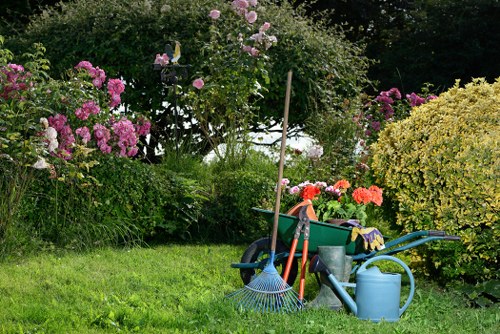 Our vehicle strategy supports low-carbon operations: the fleet for garden services Mottingham includes fully electric vans, plug-in hybrids and carefully managed low-emission diesel options where electric charging is not yet viable. In addition to low-emission vehicles we use optimized route planning software, low-rolling-resistance tyres and driver training to reduce fuel consumption and emissions on every job.
Practical on-site steps include dedicated bins for organics, separate containment for wood and masonry, and labelled sacks for plastics and metals. We use shredders and chippers to convert woody waste into mulch, and store composting material in lined bays to prevent leachate and protect local soil health. All of these steps contribute directly to our recycled material targets and to the quality of the surrounding environment.
 Finally, Garden Maintenance Mottingham invests in community education so that sustainable garden maintenance Mottingham-wide becomes standard practice. We run short site briefings for clients and neighbourhood groups on correct separation, reuse opportunities and seasonal pruning choices that reduce waste. By combining targeted operations, local transfer station use, charity partnerships and a low-carbon fleet we create a replicable model for an eco-friendly waste disposal area and a truly sustainable rubbish gardening area.
- 70%+ recycling target for garden-originated waste within two years
- Use of borough Household Recycling Centres and transfer stations for compliant processing
- Partnerships with community projects to reuse timber, planters and soil
- Low-carbon vans and route optimisation to cut transport emissions
Garden Maintenance Mottingham is committed to measurable, local action: better separation, stronger community links and cleaner gardens that avoid landfill. Through ongoing review and transparent reporting we aim to raise recycling rates and to make sustainable garden care the local standard.